
A well built patio gives you a firm, level place to sit, eat outside and enjoy the garden, whatever the weather has done to the lawn. We build new patios and paved areas for homes, landlords and small businesses across South Wales, from a simple seating area by the back door to a larger terrace that links the house to the rest of the garden.
We look at the site first, then agree the size, layout, paving and cost with you before any digging starts. After that we build it properly from the ground up, finish the edges neatly and take away what we have dug out. If you are unsure what you want, we can talk through ideas and show you what is possible.
Most of a good patio is hidden underneath. We mark out the area, dig out the soil to the right depth and build a compacted sub-base, so the slabs sit on something solid. Cutting corners here is why many patios sink, rock or crack within a few winters, and it is the part we refuse to rush. We would rather explain this clearly now than have you find out later.
The slabs are laid on a bed, with a slight fall so rainwater runs away from the house instead of pooling. We point the joints, cut the paving neatly to fit around corners and drains, and check levels as we go. The result should be a surface that is flat to walk on and drains properly. Where there are steps or a house wall, we adjust the levels so the joins sit correctly.
There is plenty of choice. Sandstone-look paving gives a warm, natural feel and suits many older houses. Porcelain is dense, hard wearing and easy to wipe clean, and works well in a modern garden. Natural stone has real character but varies more from slab to slab. We explain the differences and show you what suits your garden and house. Samples or photographs can help you picture the finished area before you commit.
Edges and meeting points need thought. We take care where the patio reaches house walls, steps and borders, so that water drains away and the joins look tidy. Think about the colour of your brickwork, how the area is used and how much cleaning you are happy to do, as these affect which paving is the sensible choice. We also keep the pattern of the slabs in mind, so cuts at the edges look deliberate.
Many South Wales gardens slope, especially in valley towns where terraced houses climb the hillside. A patio on a slope may need digging into the bank, a retaining edge or a step up, and we talk through these options on site. Heavy rain is common here, so getting drainage right matters more than anything else. On very steep or tight sites we explain what extra work may be involved before agreeing anything.
Before work starts, think about where you want to sit, how the sun moves across the garden and where furniture or a barbecue will go. Check access too, since slabs and materials have to be carried in. A paved area next to a road or large building can have rules to check, so ask your council if unsure. Landlords and businesses should also think about slip resistance and how easily the surface can be cleaned.
Real jobs we have completed.
 Patio Construction
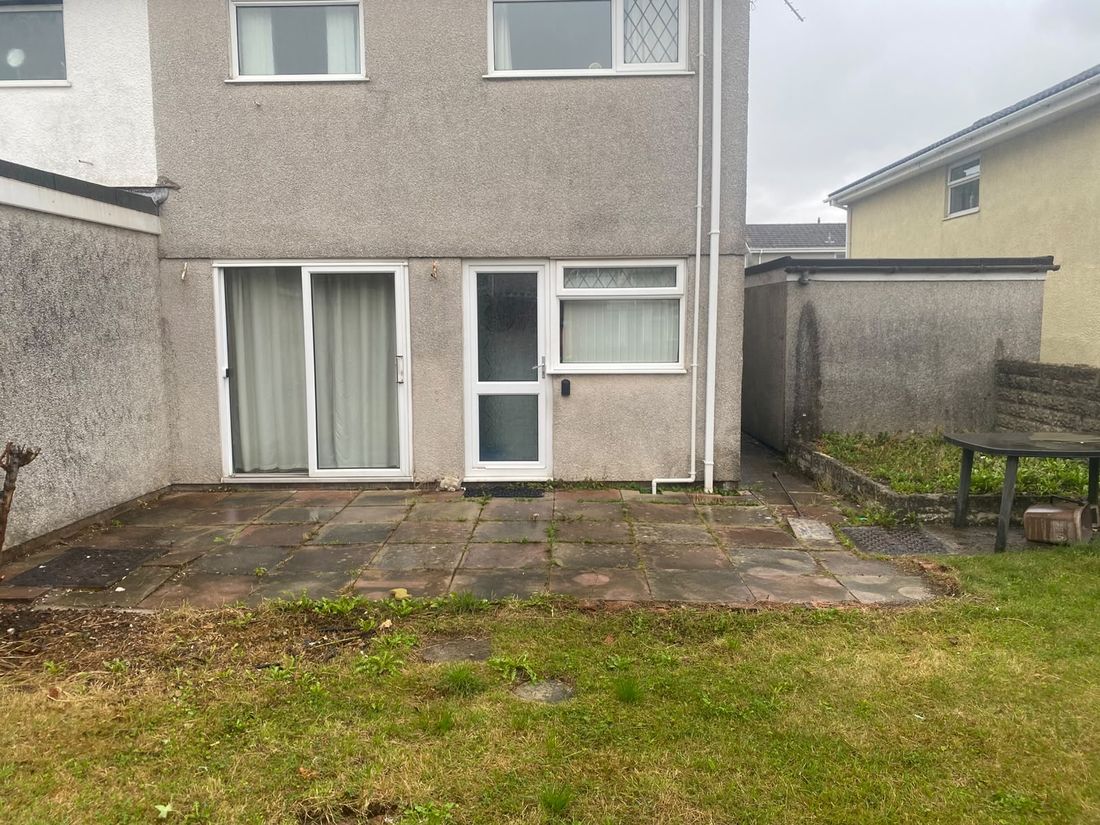
We cleared the old paving at the back of a Bridgend house, compacted the base and stacked new slabs ready for laying.
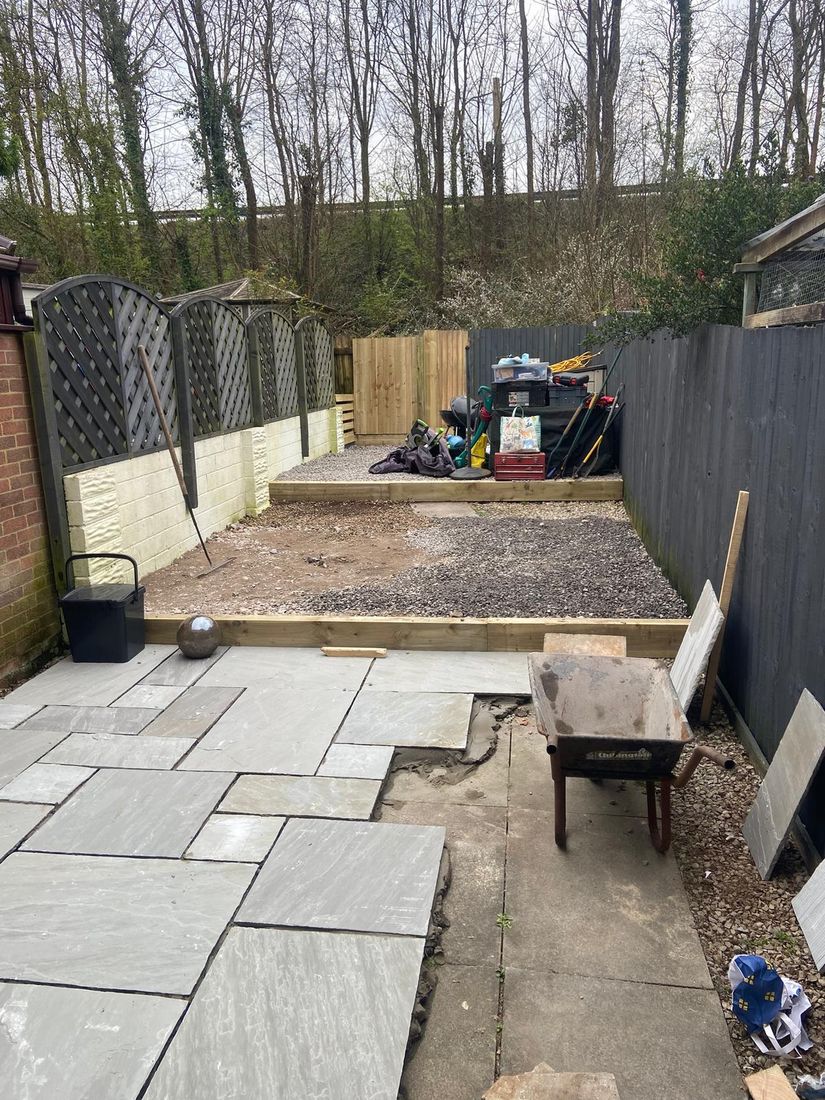
See the project →Patio ConstructionWe laid new grey paving slabs in a narrow Cardiff garden, with timber-edged gravel beds and a membrane-lined side strip.
See the project →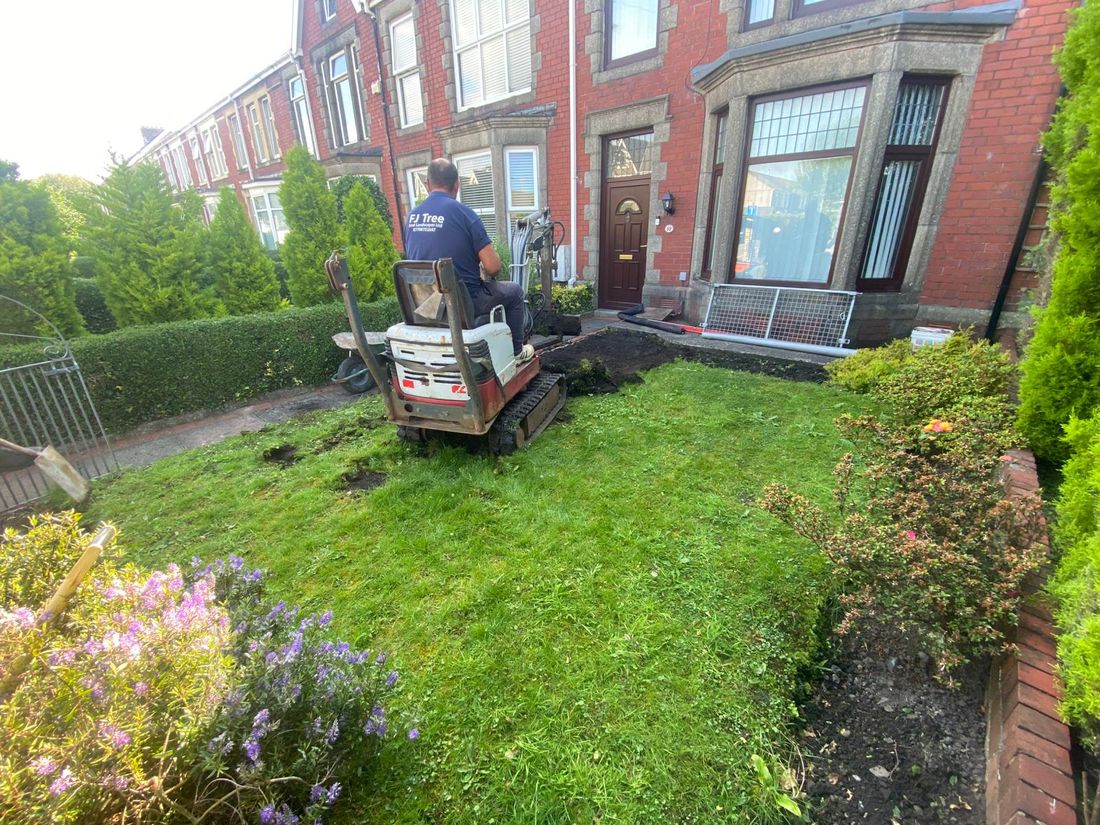 Patio Construction
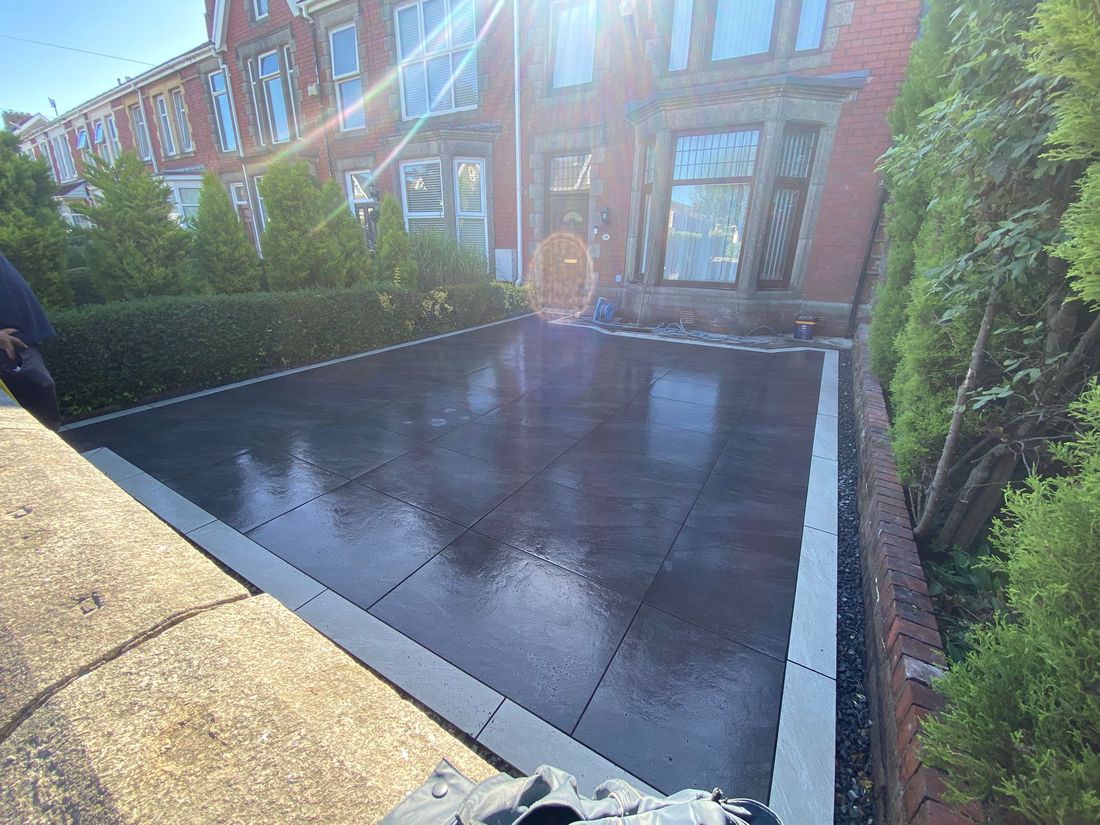
We replaced the front lawn of a red-brick terraced house in Neath with dark grey paving and a pale border of edging stones.
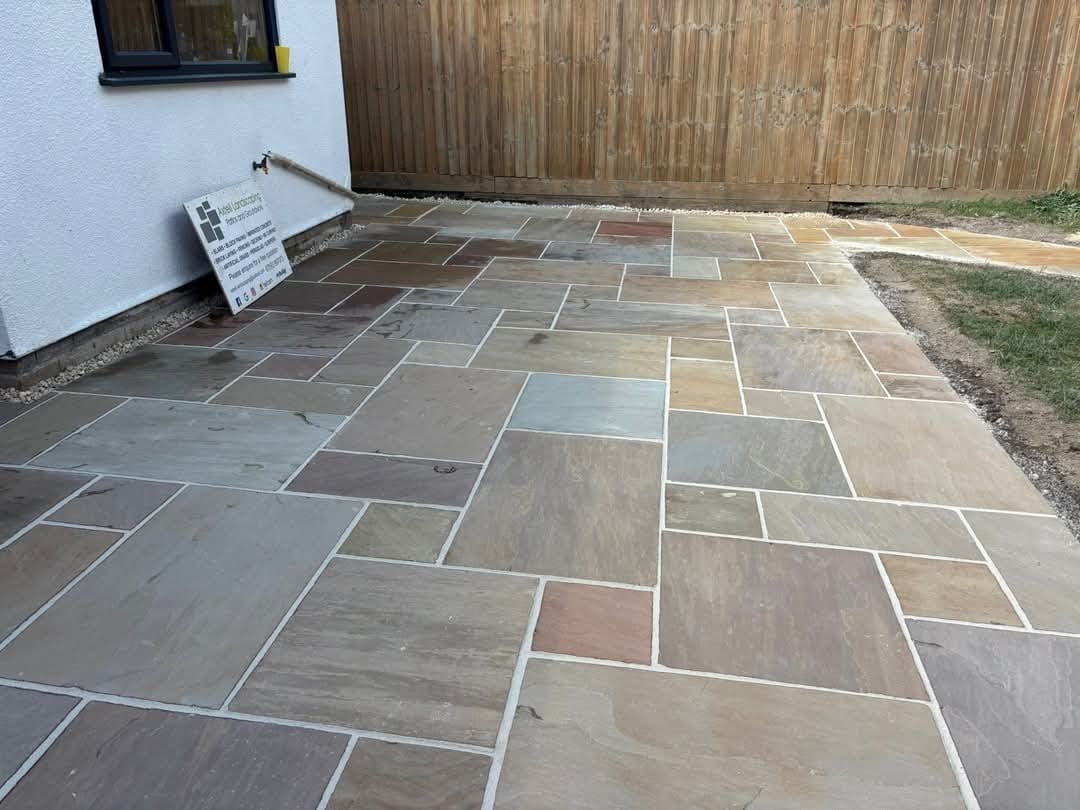
See the project →Patio ConstructionWe laid a patio of mixed-tone natural-look slabs along the wall of a rendered house, edged with gravel, in South Wales.
See the project →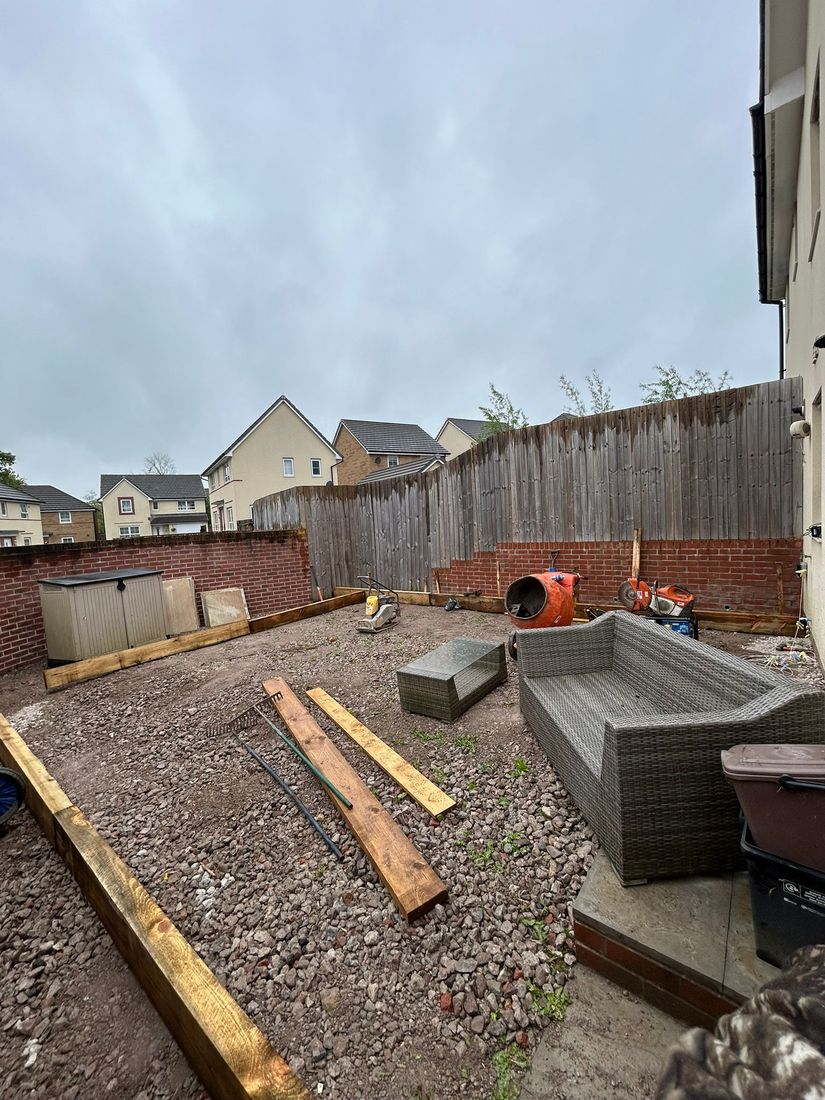 Patio Construction
We prepared a walled garden at Ogmore-by-Sea for a new patio, with timber edging set out and a compacted gravel base laid.
See the project →We work across South Wales. Pick your town to see how patio construction works locally.
Porcelain offers a consistent, low-maintenance surface, while natural stone brings variation and character, and both depend on a properly built base.
Read the guide →The cost of a patio depends on its size, the paving you choose, the ground beneath it and how easily materials and waste can be moved.
Read the guide →
Tree surgery is priced job by job rather than from a fixed list, so this guide explains what moves the cost up or down and how to get a firm figure.
Read the guide →The sub-base is a compacted layer of hard material dug into the ground beneath the paving. It spreads the load and stops slabs sinking or rocking over time. It is the least visible part of a patio, but it matters more than almost anything you can see on the top.
A small slope across the paving lets rainwater run off instead of sitting on the surface or flowing back toward the house wall. It is hardly noticeable underfoot. We plan the direction of the fall at the start, so that water drains to a lawn, border or drain.
It depends on your house, garden and how you use the space. Sandstone-look is popular and natural-feeling, porcelain is tough and easy to clean, and natural stone has real character. We talk through the options, and you can ask us about the finish and the maintenance of each.
Yes. Digging out for a patio creates a good deal of soil, turf and rubble, and we take it away as part of the job. When we finish, the new paving is brushed down and the surrounding area left tidy, so you can start using the space.
Tell us what needs doing and where. We will come back to you, or call 07766 919630 if it is urgent.